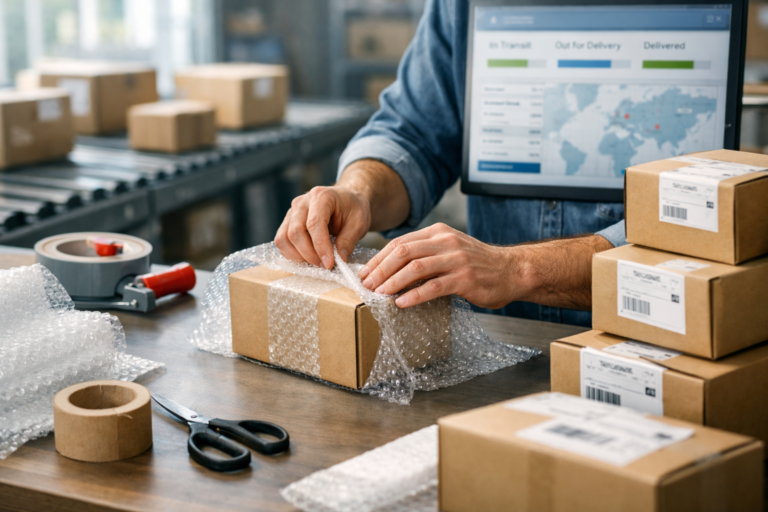
A single packaging mistake can cost your business thousands of dollars. In 2023, a report by the International Safe Transit Association revealed that more than 11% of global shipments are damaged during transit due to improper packaging, not transportation itself. This means thousands of companies lose millions annually because of a preventable error: packaging shipments incorrectly.
The consequences go beyond financial losses. Poor packaging can lead to damaged goods, delayed deliveries, customer dissatisfaction, and even legal disputes with carriers.
The good news is that these risks can be reduced by up to 70% simply by applying professional packaging best practices, according to a study published by the Packaging Research Center.
In this comprehensive guide from Skipper, you will discover everything you need to know about packaging shipments professionally, from selecting the right materials and applying advanced packing techniques to understanding the global standards used by leading companies.
What Is Shipment Packaging and Why It Matters
Shipment packaging is the process of protecting products using materials and techniques designed to minimize the risk of damage during transport, storage, and handling.
This includes:
- Choosing the right box.
- Using internal protective materials.
- Securing the shipment tightly.
- Applying the correct labels.
- Complying with international shipping standards.
Packaging is therefore a strategic element in the supply chain.
Common Risks That Threaten Shipments During Transit
Shipments face multiple risks throughout their journey, including:
Shocks and Vibrations
Shipments pass through several stages:
- Loading
- Truck transportation
- Air or sea transport
- Unloading
Each stage exposes the shipment to potential impact. According to a report by the FedEx Institute of Technology, a single shipment can experience more than 50 shocks during one international shipping journey.
Pressure and Stacking
In sea and air freight, boxes are often stacked on top of one another.
If the packaging shipment is not strong enough, the box may collapse under pressure.
Humidity and Temperature Changes
This is especially critical in sea freight.
High humidity can lead to:
- Damage to electronic products
- Mold growth
- Metal corrosion
Improper Handling
Even when working with the best carriers, it is impossible to control every human action. For this reason, packaging shipment must be designed to withstand worst-case scenarios.
Best Materials Used for Packaging Shipment
Choosing the right materials is the foundation of successful packaging shipment. The most effective materials include:
Corrugated Boxes
The most widely used packaging solution worldwide.
Key advantages:
- Strong
- Lightweight
- Cost-effective
- Shock-resistant
According to the Fiber Box Association, corrugated boxes provide up to 40% greater protection compared to regular cartons.
Internal Protective Materials
These include:
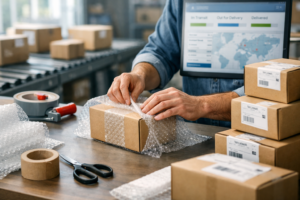
- Bubble wrap
- Foam inserts
- Air pillows
- Packing peanuts
Their primary function is shock absorption during transit.
Stretch Wrap
Used to secure products in place,
especially when stacked on pallets.
Industrial Adhesive Tapes
It is recommended to use:
- Tape with a minimum width of 5 cm
- Moisture-resistant tape
Moisture-Resistant Packaging
Such as:
- Anti-moisture bags
- Silica gel packs
How to choose the right box for each shipment
Choosing the wrong box is one of the biggest causes of damaged shipments.
The basic rule: the box should be 5 to 8 cm larger than the product on each side.
This allows for the addition of protective materials.
Do not use:
- Boxes that are too large
- Boxes that are too small
Both are dangerous.
Best Professional Techniques for Packaging Shipment
Box-in-Box Technique
This method involves placing the product inside one box, then placing that box inside a larger outer box. According to the Amazon Packaging Lab, this technique can reduce damage by up to 50%.
Even Weight Distribution
Avoid concentrating all the weight on one side. Uneven weight increases the risk of collapse or damage during handling.
Filling Empty Spaces Completely
Any empty space allows movement, and movement leads to damage.
Drop Testing
Major companies conduct drop tests from a height of 80 cm to ensure the package can withstand impact.
What Are the International Standards for Packaging Shipment?
There are global standards that must be followed to ensure shipment safety. The most important include:
- ISTA Standards
- ISO Packaging Standards
These standards define:
- Box strength requirements
- Shock resistance testing
- Compression resistance levels
Packaging Shipment Based on Product Type
For Electronic Products
Use:
- Foam inserts
- Anti-static bags
For Glass Products
Use:
- Bubble wrap
- Double boxing
For Food Products
Use:
- Insulated packaging
- Moisture-resistant materials
For Heavy Products
Use:
- Pallets
- Wooden crates
Common Packaging Shipment Mistakes and How to Avoid Them
Common Mistakes
- Using weak boxes.
- Failing to use sufficient protective materials.
- Leaving empty spaces inside the box.
- Using low-quality adhesive tape.
- Not applying “Fragile” labels when required.
You can avoid these issues by following advanced best practices used by global companies, including:
- Vibration testing.
- Compression testing.
- Humidity testing.
- Temperature testing.
You should also ensure the following:
- Selecting the appropriate box.
- Using adequate protective materials.
- Securing the product properly.
- Sealing the box tightly.
- Applying the necessary labels.
- Choosing a reliable shipping company through Skipper.
The Role of Packaging Shipment in Reducing Shipping Costs
Good packaging may seem expensive.
In reality, it saves money.
How?
- It reduces return rates.
- It minimizes product damage.
- It lowers the risk of disputes.
According to a report by McKinsey & Company, effective packaging can reduce logistics costs by up to 15%.
The Link Between Packaging and the Right Shipping Company
Even the best packaging needs a professional shipping company. That’s where Skipper comes in.
How does Skipper help you?
Skipper is a smart platform that connects you with the best:
- International shipping companies
- Storage companies
- Customs clearance companies
- Local transport companies
Instead of searching randomly, Skipper provides you with:
- Comparison between companies
- Accurate information
- Multiple options
- Competitive prices
This reduces risk and increases shipping efficiency.
How does Skipper ensure the safety of your shipments?
Skipper does not ship directly, but it provides you with the most important element: making the right decision.
With Skipper’s guide, you can:
- Choose companies that use professional packaging standards.
- Choose companies that provide shipping insurance.
- Choose companies with a strong reputation.
Why Is Skipper the Smart Choice for Businesses and Individuals?
Skipper is not just a directory.
It is a platform that helps you:
- Reduce risk
- Save money
- Choose the best shipping companies
Whether you are:
- A company exporting products
- An e-commerce store
- An individual shipping goods
Skipper helps you make the right decision.
Packaging Shipment: Precision Protection for Your Investment
A significant number of global shipments are damaged due to packaging errors, making the “art of protection” a financial strategy before it becomes a logistics one.
Real protection begins with selecting double-walled corrugated boxes that exceed the product dimensions by at least 8 cm, while applying the 5 cm cushioning rule to absorb shocks and vibrations that may exceed 50 impacts in a single journey.
Major companies rely on the Box-in-Box technique to reduce damage by up to 50%, along with industrial adhesive tapes that are at least 5 cm wide.
Complying with ISTA packaging standards is not a luxury. It is an effective way to reduce logistics costs by up to 15% while avoiding compensation disputes and product returns.
Start protecting your shipments with Skipper Guide
If you want to ensure the safety of your shipments, reduce losses, and improve your customers’ experience, the first step is not only to improve the packaging shipments practices, but also to choose the right shipping company.
With Skipper Directory, you can:
- Connect with Leading Shipping Companies in Egypt and Globally
- Compare services and prices
- Choose the best solution easily
Start using Skipper Directory now and make smarter and safer shipping decisions.
Frequently Asked Questions
- What Is the Best Way to Ensure Safe International Shipping from Egypt?
Use professional packaging shipment practices, choose a reliable shipping company, insure your shipments, and use a directory like Skipper to compare options.
- How Long Does International Shipping from Egypt Take?
It depends on the method:
- Air freight: 3 to 7 days
- Sea freight: 20 to 45 days
- What Is the Cost of International Shipping from Egypt?
It depends on:
- Weight
- Size
- Destination
- Shipping method
- Can International Shipments from Egypt Be Tracked?
Yes. Most shipping companies provide tracking systems.
- What Are the Leading International Shipping Companies in Egypt?
There are many options. You can use Skipper’s directory to compare and choose the most suitable provider.
- Does Packaging Affect International Shipping Costs?
Yes. Weight and size affect pricing, but proper packaging shipment can help reduce overall costs.